
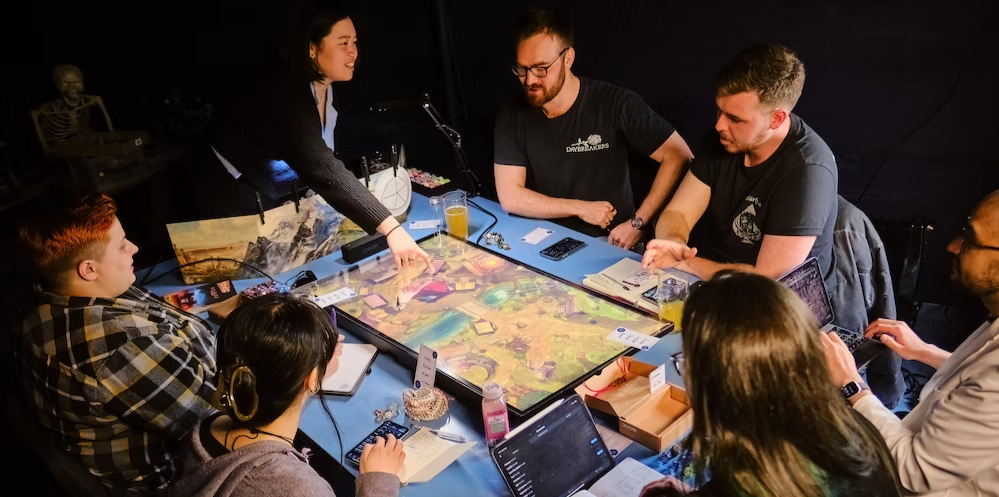
I’ve been playing Dungeons & Dragons since 2019 and have taken part in a wide range of campaigns as both a player and a Dungeon Master. That experience has given me a strong grasp of the rules, but more importantly, it has taught me how to use those rules to support a fun, engaging game for the people at the table. Whether you’re brand new to D&D or have been playing for years, I aim to create a safe, welcoming environment where everyone can learn, contribute, and have a good time.
My Approach
I run games that lean more heavily into roleplay and exploration than constant combat. I like giving players room to inhabit their characters, investigate the world, and make meaningful choices that shape the direction of the story. Combat still matters, but it is usually one part of a larger scene rather than the only focus.
When combat does happen, I prefer it to feel fast, tense, and purposeful. I try to keep encounters moving in a way that reflects the pace and urgency of the fiction. Many fights include secondary objectives, shifting circumstances, or alternatives to simply defeating every enemy in front of you. Sometimes the smartest solution is not the most violent one, and the longer a fight drags on, the more likely it is that the situation will get more complicated. All of that being said, I do not pull punches in combat: if an enemy wants you dead, they will go for killing blows during death saves or counterspell and revivify. Encounters may not even be built to be “fair” - sometimes you will find yourself in an encounter beyond your party’s capabilities, and you should consider fleeing instead of duking it out.
I ask for a lot of skill checks. In my games, if you want to attempt something, there is a good chance the dice will have a say in how it goes. That includes not just major actions in the moment, but sometimes even retroactive ideas like whether your character would have prepared for something earlier. I like letting the story be shaped by the actual capabilities of your character, not just by what seems convenient after the fact. The dice help decide the direction of the story, filtered through your character’s strengths, weaknesses, and choices. What you build in terms of skill and tool proficiencies will greatly impact your character’s journey.
At my table, D&D is a team game first. I see it as collaborative storytelling, and I encourage players to approach problems together rather than as isolated individuals competing for the spotlight. I enjoy presenting parties with puzzles, obstacles, and encounters that reward coordination, communication, and dividing responsibilities in smart ways. Some of the best moments in the game happen when everyone has a different role to play in solving the same problem.
That same philosophy shapes how I handle player conflict. I do not allow player-versus-player combat or disruptive in-party hostility. Characters can disagree, argue, and have different priorities, but those conflicts should serve the story rather than derail the group. When tensions come up, I prefer to resolve them quickly, fairly, and with a willingness to disagree, commit, and move forward together. If you build a character who would act like a selfish jerk and work against the rest of the group with the excuse “It’s what my character would do” don’t be surprised if your character is struck by 9000 points of lightning damage and you’re asked to create a character that would work better with a team.
Finally, I am very susceptible to the Rule of Cool. If a player comes up with something inventive, dramatic, or just undeniably fun, I will usually try to find a way to let it work. That said, I also care about the long-term health of the game, so some of those rulings may be one-time allowances rather than permanent precedents. I like rewarding creativity, but I also want to keep the campaign balanced and surprising. Broken builds or clever combos that make one player overpowered in a way that will diminish the experience of other players at the table will need to be rebalanced, so don’t expect some internet-meme OP build to last long before adjustment.
At the end of the day, my goal is for everyone at the table to build heroic characters who must leverage coming together as a group to tackle an otherwise-unsurmountable problem. I want my players to succeed, I revel in their wins, and I am always on their side. My goal is never to rug-pull or “defeat” my players, the goal of the experience is to end in a satisfying conclusion in which the characters overcome the odds.